Foam Roller for Beginners: How to Choose and Use One
Sore hips, tight calves, a knotted upper back after leg day — and a wall of foam rollers online that all look roughly the same. Smooth ones, spiky ones, 33 cm ones, 45 cm ones, travel-sized half-crescents. Pick the wrong one and your first session hurts for the wrong reason, and the roller ends up in the closet. Pick the right one and ten minutes a day does most of what an occasional massage does. This guide walks beginners through what a foam roller actually does, which type fits your body and training, and how to use one safely from day one.
Key Takeaways
- Beginners should start with a medium-density, dual-texture roller around 33 cm — firm enough to work, forgiving enough to learn on.
- Texture is a tool, not a prize: smoother surfaces suit daily use and sensitive areas; grids and spikes suit large, dense muscles.
- Size beats features when you travel: a 33 cm roller covers most needs; a mini crescent roller lives in your gym bag.
- Roll slowly — about 2.5 cm per second — and pause 20–30 seconds on tender spots instead of grinding back and forth.
- Roll muscles, not joints and bones: avoid the lower back, neck, knees, and elbows.
- Five to ten minutes after a workout is enough. Consistency matters more than intensity.
What Does a Foam Roller Actually Do?
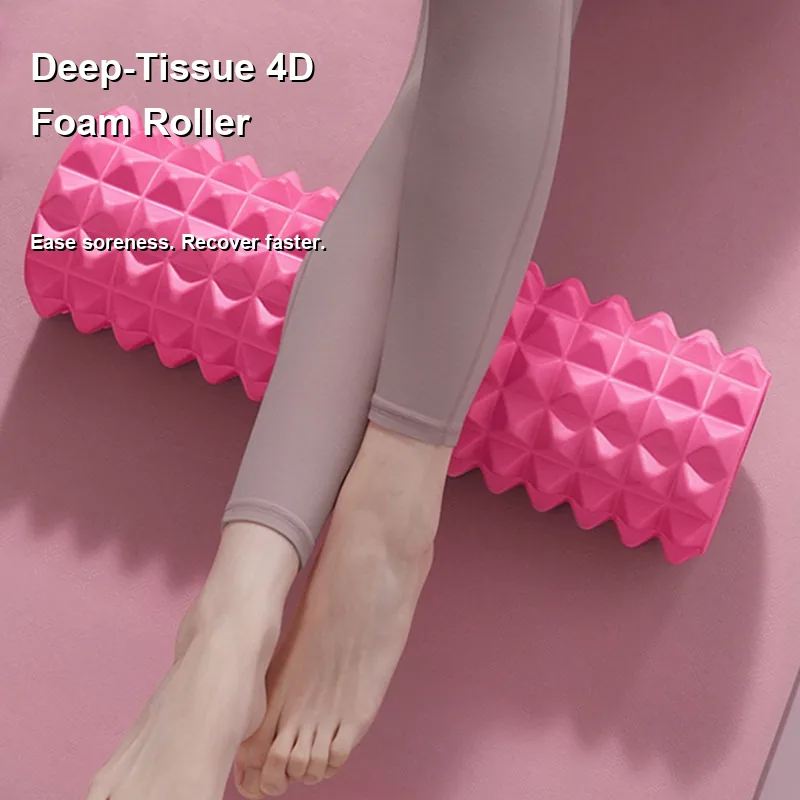
A foam roller is a self-massage tool. Rolling a muscle over the roller applies sustained pressure that helps the muscle and its connective tissue relax — what physiotherapists call self-myofascial release. Used consistently, it eases post-workout soreness, restores range of motion, and gives tight desks-workers real relief in the hips and upper back.
What it does not do is “break up scar tissue” or “lengthen muscles” — those are marketing leftovers. The honest version: pressure plus slow movement calms overactive muscle tone and improves how your nervous system tolerates stretching. That is exactly why the way you roll matters more than how hard you roll.
Which Foam Roller Should a Beginner Choose?
Three decisions cover 90% of the choice: surface, density, and size.
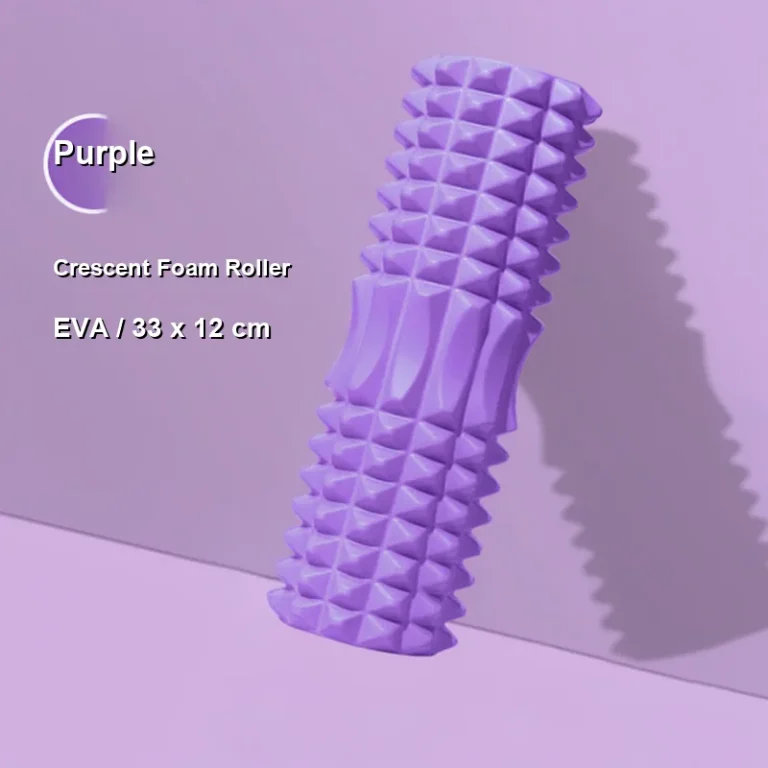
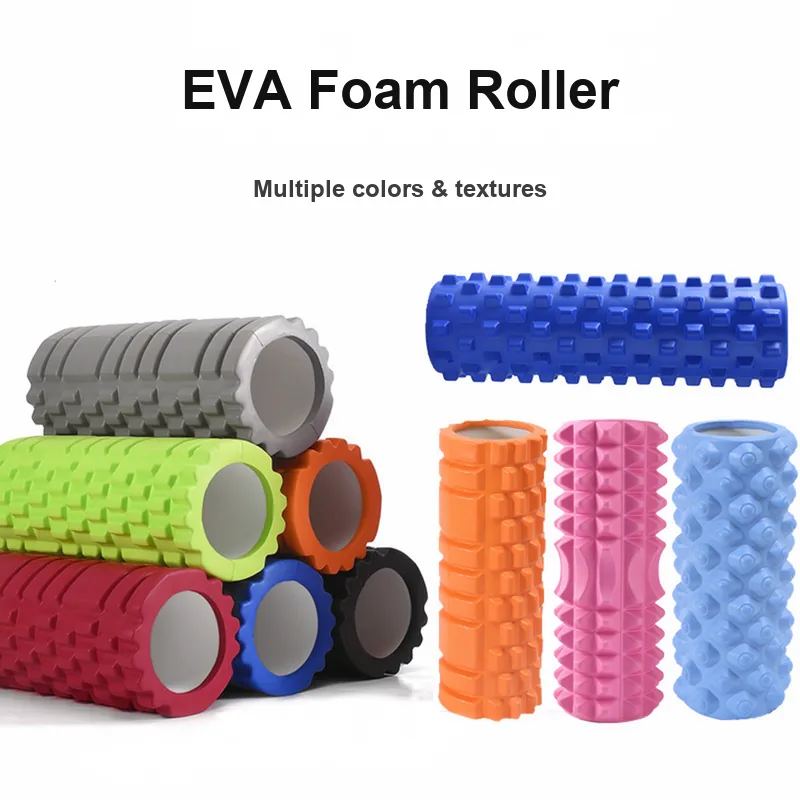
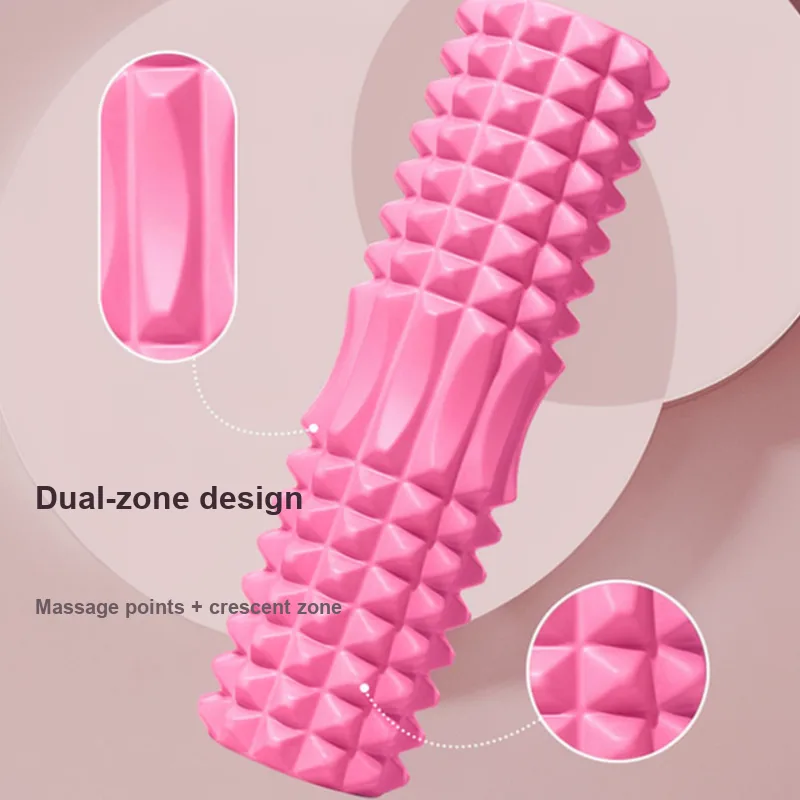
Surface. A dual-zone design — smooth sections paired with a massage-texture band — is the sweet spot. You learn on the smooth part and graduate to the textured part as your tolerance grows. Spiky rollers deliver the deepest pressure and suit large, dense muscles like quads and glutes; they are rarely a beginner’s first choice.
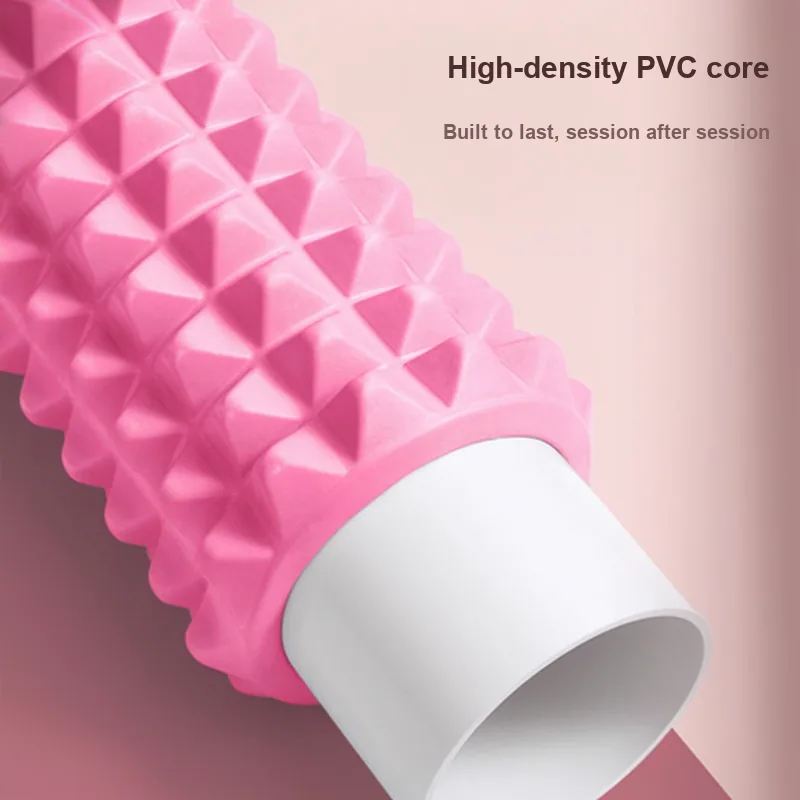
Density. The core matters as much as the cover. A high-density hollow PVC core keeps the roller from collapsing under your body weight — a soft roller that folds under load stops working precisely where you need pressure. EVA foam over a firm core is the standard for good reason.
Size. 45 cm rollers give you stability for lying positions across the spine; 33 cm rollers are easier to store, easier to travel with, and still cover every muscle group. For most beginners, 33 cm is the practical pick — and if you commute to a gym, a mini crescent roller that fits a carry bag removes every excuse.
“The harder and rougher the roller, the better it works.”False
Pressure that makes you brace and hold your breath makes muscles guard, not release. If you are clenching, the session is doing less. Start medium, breathe slowly, and let your tolerance build over weeks — deeper texture and firmer cores will still be there when you are ready.
“A firm, high-density core is what keeps a roller effective.”True
Under body weight, a collapsing roller spreads the load out and the pressure disappears exactly where you need it. Check the core before the cover: a hollow PVC core that does not deform is what separates a tool from a toy.
Quick Comparison: Which Type Fits You?
| Type | Surface feel | Best for | Skip it if… |
|---|---|---|---|
| Smooth roller | Even, gentle | Daily maintenance, sensitive areas, first-timers | You want deep pressure on big muscles |
| Dual-zone / grid | Mixed bands | Beginners who want one roller that grows with them | You only roll occasionally (smooth is fine) |
| Spiky | Deep, pointed | Large dense muscles: quads, glutes, hamstrings | You are new or bruise easily |
| Mini / travel | Crescent, compact | Gym bags, office drawers, targeted spots | You want to roll while lying across it |
How Do You Use a Foam Roller Safely?
Two rules before any technique: roll muscle, not joints, and go slow. Avoid the lower back, neck, knees, and elbows — those areas have bones and nerves close to the surface, and no roller session should ever feel sharp or electric.
A starter routine that takes about six minutes:
- Calves: sit with the roller under each calf, roll from ankle toward knee, 45 seconds per side.
- Quads: face down, roller under the front of the thighs, 45 seconds.
- Glutes: sit on the roller, cross one ankle over the opposite knee, lean into the glute, 45 seconds per side.
- Upper back: lie with the roller across the shoulder-blade line (never the lower back), small rolls, 45 seconds.
- Lats: lie on your side, roller under the armpit line, 30 seconds per side.
When you find a tender spot, stop and hold for 20–30 seconds while breathing slowly — the release you feel is the nervous system letting go, and it needs those seconds. If a spot is too intense, ease pressure by shifting weight onto your limbs and work the surrounding area instead.
FAQ
Is a smooth or textured foam roller better for beginners?
Start smooth or dual-zone. Smooth surfaces give even, moderate pressure that teaches your body the movement without overload; a dual-zone roller lets you increase intensity selectively as tolerance improves. Save spiky rollers for large, dense muscles once rolling is routine.
How long should a foam rolling session last?
Five to ten minutes is enough. Give each major muscle group 30–45 seconds, pausing up to 30 seconds on tender spots. Rolling longer adds soreness, not benefit — treat it like brushing your teeth, not a workout.
Is it OK to foam roll every day?
Yes, at moderate pressure. Daily light rolling beats occasional aggressive sessions. If skin or muscles stay sore for hours afterward, reduce pressure or take a rest day; the tool works through consistency, not force.
Should I foam roll before or after a workout?
Both work, for different reasons: a short pre-workout roll wakes up range of motion, while a post-workout session of 5–10 minutes eases next-day soreness. Most beginners get the most value after training, when muscles are warm and tight spots are obvious.
What size foam roller do I need?
A 33 cm roller covers every muscle group, stores easily, and travels well; choose 45 cm if you mainly roll while lying across it and want extra stability. For gym bags and desks, a mini crescent roller handles targeted spots in a fraction of the space.
Ready to put this into practice? Browse the VVZIO recovery and strength collection to pick your first roller, or read how to start training with small dumbbells to build a simple home routine around it. If you are setting up a full home studio, the first Pilates setup guide pairs well with a roller for warm-ups and recovery.
Related reading

test
Sourcing heavy-gauge thermoformed parts from China can cut part cost substantially, but the quotes you collect will look…